








How Christian Mediators Can Help During Divorce
Christian mediators for divorce help spouses discuss parenting, finances, and separation in a way that reflects their faith. The goal may be to repair the marriage or, if divorce goes forward, to reach workable agreements with less conflict. In North Carolina, a family law attorney should review proposed legal terms before you sign them.
When your marriage is at risk, you may be worried about your children, your finances, and whether seeking a divorce conflicts with your beliefs. This guide explains what Christian mediation can do, when it may not be safe or useful, and how it fits alongside the legal process.
I'm Kara Goodman, founder of The Goodman Law Firm in Charlotte, where I work on divorce, custody, support, and mediation matters. If you searched for "christian mediators divorce," I'll help you understand your options without losing sight of your legal rights.
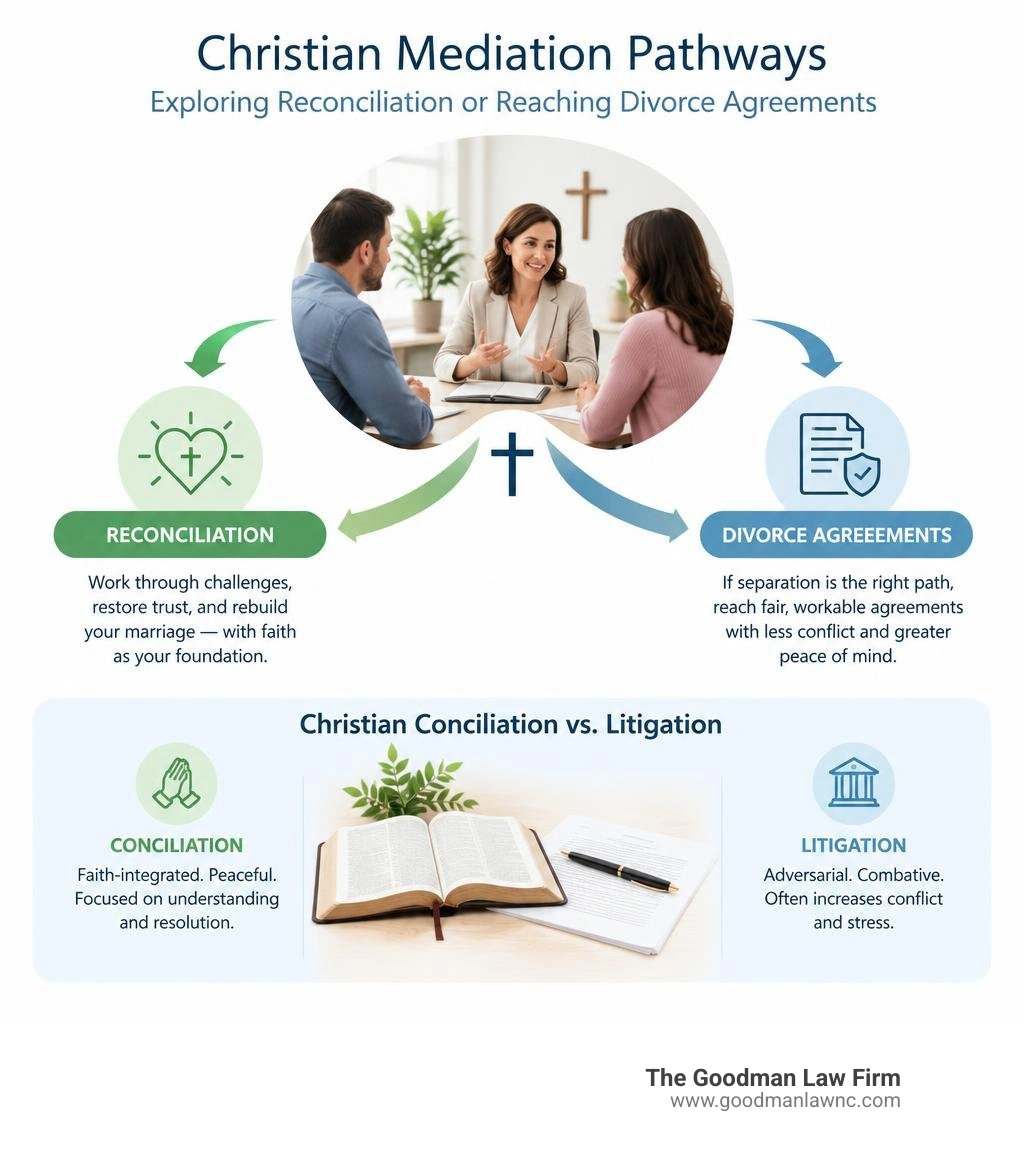
What Is Christian Conciliation and How Does It Differ From Litigation?

Christian conciliation is a structured, faith-integrated dispute resolution process. It is designed to help believers settle conflicts peacefully without entering an adversarial courtroom battle. While standard litigation pits spouses against each other as opposing parties, conciliation approaches marital breakdown through a biblical framework of grace, truth, and mutual accountability.
In civil litigation, judges make unilateral, binding rulings based strictly on statutory law. This dynamic often heightens hostility, drives up expenses, and leaves long-term family relationships fractured. In contrast, faith-based mediation is entirely voluntary and confidential. It focuses on resolving underlying emotional and spiritual friction alongside practical legal arrangements.
Couples often wonder how conciliation fits within state legal processes. Depending on your goals, Christian dispute resolution can take the form of facilitative mediation (where you make all final decisions yourselves) or arbitration (where a designated third party makes a decision). Understanding the difference between mediation and arbitration in North Carolina family law is essential when deciding which path protects both your conscience and your legal interests.
Biblical Foundations of Dispute Resolution
The practice of Christian conciliation rests directly on scriptural mandates regarding peacemaking and personal accountability:
- Matthew 18:15-20: Outlines a clear, stepwise protocol for addressing personal offense, encouraging direct private conversation, supportive mediation with trusted peers, and church involvement before escalating matters publicly.
- 1 Corinthians 6:1-8: Admonishes believers against taking internal family and community disputes before secular judges, urging Christians to seek wise counsel within the faith community.
- Galatians 6:1: Calls for restoring broken relationships gently, balancing compassionate support with honest self-examination.
Rather than relying on aggressive legal posturing, faith-based mediation invites spouses to address core heart issues, confess personal wrongdoing, and extend genuine forgiveness.
The Four Stages of the Christian Conciliation Framework
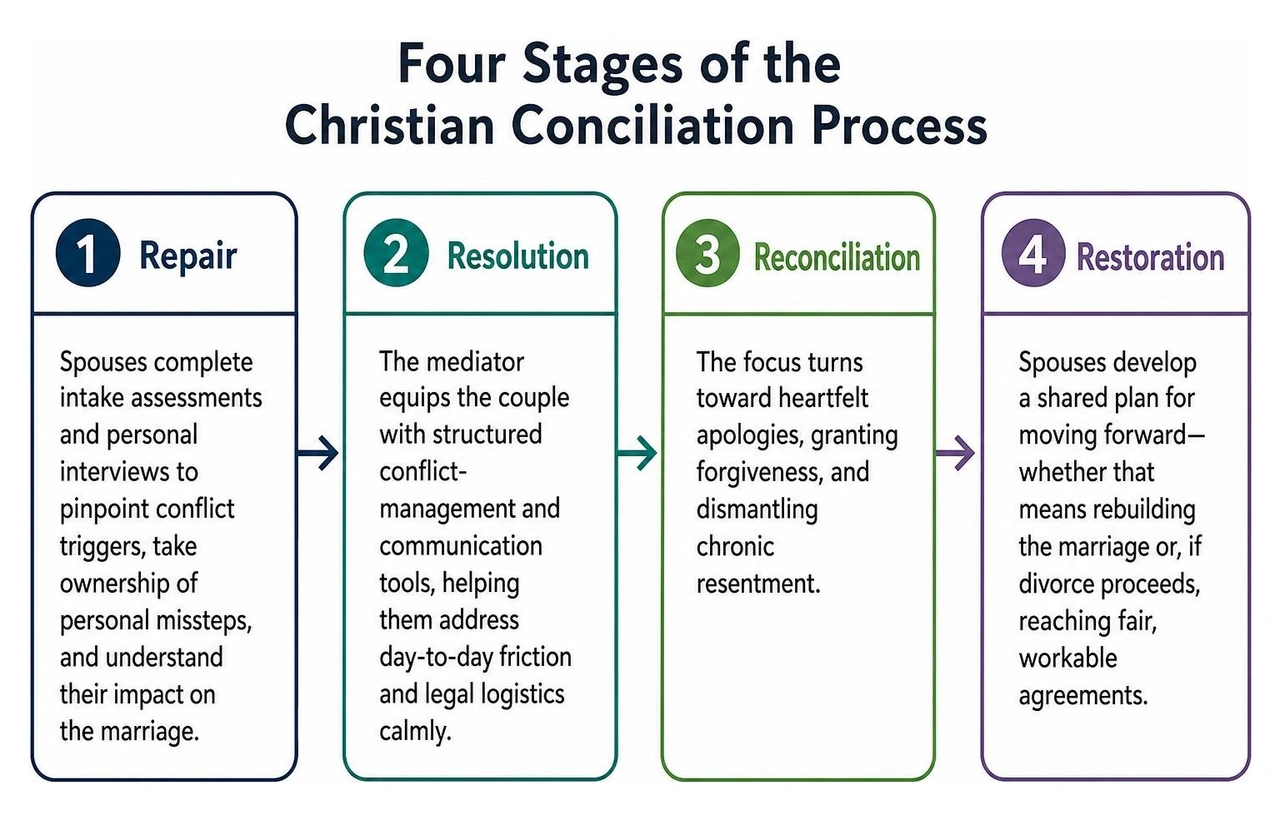
Most certified Christian conciliators follow a systematic, multi-tiered framework designed to address spiritual wounds and practical logistics:
- Repair: Spouses complete intake assessments and personal interviews to pinpoint conflict triggers, take ownership of personal missteps, and understand their impact on the marriage.
- Resolution: The mediator equips the couple with structured conflict-management and communication tools, helping them address day-to-day friction and legal logistics calmly.
- Reconciliation: The focus turns toward heartfelt apologies, granting forgiveness, and dismantling chronic resentment.
- Restoration: The parties build a sustainable future plan, whether that means working toward long-term marital renewal or navigating divorce mediation to establish a peaceful, faith-aligned separation.
Why Spouses Turn to Christian Mediators for Divorce
For many Christian couples, the prospect of divorce brings profound spiritual distress and social isolation within their church community. Seeking a faith-aligned mediator allows spouses to handle high-stakes disputes while preserving their dignity and honoring their shared values.
Conciliation can be applied across a wide spectrum of complex disputes—including marital separation, estate administration, and property conflicts—providing a constructive alternative when divorce gets contentious.
Rebuilding Trust and Exploring Reconciliation Opportunities
One unique aspect of working with Christian mediators for divorce is that the door to marital restoration remains open whenever possible. Unlike secular legal processes that move straight toward dissolution, faith-based dispute resolution often begins by assessing whether the marriage can be preserved.
- Intensive Mediation Programs: Focused 2-day intensives disrupt destructive patterns rapidly, with studies indicating that approximately 80% of couples undergoing intensive conciliation experience meaningful relationship restoration.
- Skill-Building Tracks: A 6- to 9-week coaching and mediation sequence helps couples develop active listening, emotional regulation, and biblical conflict resolution skills.
- Therapeutic Separation Roadmaps: When living together has become toxic, mediators can craft a clear, structured separation roadmap covering temporary child schedules, finances, and personal boundaries to facilitate healing while preventing hasty divorce filings.
Protecting Family Relationships and Children from Contentious Court Battles
When reconciliation is not possible, Christian mediation shifts focus toward protecting children from the trauma of courtroom conflict. Research consistently shows that prolonged legal battles cause lasting emotional harm to young people.
By grounding co-parenting discussions in humility and mutual respect, parents can develop cooperative arrangements outside of court. Learning how collaborative divorce helps avoid courtroom battles in NC helps families maintain healthy connections with extended relatives, mutual friends, and their church community.
Essential Issues Resolved Through Faith-Based Dispute Resolution

Faith-based mediation addresses the full range of practical, financial, and custodial issues necessary for a complete legal separation. It balances biblical principles with North Carolina family law standards, providing holistic conflict management that mirrors the benefits of a collaborative divorce process.
How Christian Mediators for Divorce Structure Co-Parenting Plans
Co-parenting after divorce requires intentional cooperation. Christian mediators help parents establish detailed parenting agreements that address both practical routines and spiritual continuity:
- Faith Formation & Church Attendance: Outlining agreements regarding worship services, Sunday school participation, baptism, and youth group involvement.
- Christian Education & Activities: Determining tuition responsibilities, homeschool curriculum choices, and extracurricular activities.
- Holiday Custody Schedules: Balancing major Christian holidays—such as Christmas and Easter—alongside school breaks to prevent recurring annual conflict.
- Dispute Escalation Protocols: Establishing structured rules for discussing future parenting disagreements before seeking court intervention, promoting freedom from conflict in parenting plans.
These tailored agreements form the basis of formal, durable child custody arrangements recognized by civil courts.
Dividing Marital Assets and Establishing Fair Financial Support
Financial disagreements are among the leading drivers of divorce litigation. Faith-based mediation approaches asset division through the lens of biblical stewardship, transparency, and fairness:
- Transparent Financial Disclosures: Requiring full, voluntary financial disclosure without the need for expensive court subpoenas.
- Equitable Asset and Debt Division: Utilizing the benefits of mediation for resolving financial disputes to divide real estate, retirement accounts, and marital debt and assets equitably.
- Support Obligations: Structuring reasonable spousal support and calculating child support that meets the real-world needs of the family.
Comparing Christian Conciliation, Secular Mediation, and Traditional Litigation
Choosing the right dispute resolution model requires understanding the trade-offs in cost, duration, and spiritual focus.
| Feature | Christian Conciliation | Secular Mediation | Traditional Litigation |
|---|---|---|---|
| Primary Goal | Reconciliation or faith-aligned separation | Legal settlement agreement | Judicial determination / decree |
| Spiritual Integration | Scripture, prayer, biblical accountability | Neutral / secular | Strictly statutory |
| Typical Duration | 2-day intensive to 8 weeks | 1 to 4 sessions over several weeks | 9 to 18+ months |
| Average Cost | Low to moderate | Moderate | High (substantial attorney retainers) |
| Decision Maker | The spouses mutually | The spouses mutually | District Court Judge |
| Privacy Level | Completely confidential | Completely confidential | Public court records |
Cost, Timeline, and Relationship Outcomes
Litigating a divorce through civil court can cost tens of thousands of dollars per spouse, quickly draining retirement savings and college funds. Secular and Christian mediation both offer substantial savings by resolving issues in weeks or months rather than years.
Beyond the financial advantages, faith-based mediation preserves personal privacy and minimizes the stress of court backlogs. Choosing private dispute resolution delivers the clear benefits of collaborative family law, protecting your family's financial stability and emotional health.
When Faith-Based Conciliation Is Not Appropriate
While Christian conciliation is powerful, it is not suitable for every situation. Conciliation requires mutual honesty, emotional safety, and voluntary participation. It should not be used in cases involving:
- Active, unaddressed domestic violence or threats of physical harm.
- Severe coercive control, intimidation, or significant power imbalances.
- Untreated substance addiction or unmanaged severe psychiatric disorders.
- Intentional concealment, dissipation, or fraudulent transfer of marital assets.
In these circumstances, direct mediation can put a vulnerable spouse at serious risk. Immediate legal counsel and formal court protection—such as domestic violence protective orders—are necessary to guarantee personal safety and preserve legal rights.
Selecting the Right Conciliator and Ensuring Legal Enforceability
To ensure your mediated agreements hold up over time, you must select a mediator who possesses both theological understanding and solid family law proficiency.
What to Look for in Christian Mediators for Divorce
When evaluating a Christian conciliator, consider the following credentials and practical factors:
- Formal Certification: Look for credentials from recognized mediation and conciliation organizations. You can also consult resources like the NC Association of Professional Family Mediators directory to verify family dispute resolution training.
- Family Law Experience: Ensure the mediator understands North Carolina's specific legal rules regarding equitable distribution, custody, and post-separation support.
- Facilitative Approach: A skilled mediator guides constructive conversations without imposing personal theology or forcing an unsafe reconciliation.
- Pastoral Integration: The mediator should be willing to collaborate with your local pastors or counselors while keeping the legal proceedings professional and structured.
Court Enforceability of Conciliation Agreements and Clauses
A common misconception is that Christian conciliation agreements are merely informal, spiritual understandings. In reality, conciliation outcomes and prenuptial arbitration clauses have been upheld by both state and federal courts across the United States.
To make your mediated decisions legally enforceable in North Carolina, the agreed terms must be formalized into a comprehensive contract. Mediated terms can be drafted into valid spousal separation agreements or submitted to the court as a binding Consent Order. Having independent legal counsel review your mediated terms ensures your rights are protected before any document is signed.
Frequently Asked Questions About Christian Mediation for Divorce
Can a Christian conciliation agreement be legally binding in civil court?
Yes. When your mediation concludes, the agreed terms regarding property division, debt allocation, alimony, and child custody can be drafted into a formal Separation Agreement and Property Settlement or entered as a court-approved Consent Order. Once properly executed under North Carolina law, these agreements are as legally binding and enforceable as any standard civil contract or court judgment.
How does Christian divorce mediation differ from standard secular mediation?
Secular divorce mediation focuses primarily on legal division, financial calculations, and parenting schedules under state statutes. Christian mediation covers those same practical and legal issues while also addressing spiritual pain, communication dynamics, and mutual forgiveness. It uses prayer and biblical principles to help couples reach an agreement in a way that aligns with their Christian faith.
Can faith-based mediation save a marriage already headed for divorce?
Yes, in many cases it can. Because Christian conciliation directly addresses communication breakdowns and unresolved emotional wounds, it regularly creates opportunities for genuine reconciliation. Intensive programs and therapeutic separation frameworks give spouses structured tools to rebuild trust. However, if one spouse remains committed to ending the marriage, the mediator transitions the process toward establishing a peaceful, amicable separation agreement.
Conclusion
Divorce is one of life's most challenging transitions, especially when you are striving to honor your faith while making difficult personal decisions. Christian conciliation provides a compassionate, structured path to resolve high-stakes family issues without the bitterness and financial toll of court litigation.
Whether your goal is to explore every possibility for marital healing or to establish an amicable separation that protects your children, faith-based dispute resolution allows you to move forward with clarity, integrity, and peace of mind.
At The Goodman Law Firm, we bring more than 16 years of dedicated North Carolina family law experience to help you navigate complex domestic transitions with empathetic, strategic guidance. If you are preparing for separation or seeking a cooperative resolution, contact us today to learn more about our professional family law mediation services.
We’re Here When You Need Us
Family law challenges can feel overwhelming, but you don’t have to face them alone. Let’s talk. Reach out today, and let’s take the next step together.