







When Can a Grandparent Seek Custody or Visitation?
Grandparents do not have an automatic right to custody or visitation. In North Carolina, a grandparent custody attorney can help you find out whether you have the legal right to file, what you can ask the court for, and what evidence you need. Start by documenting your caregiving role, the child's needs, and any safety concerns. A close bond matters, but a court must also respect a fit parent's rights.
Custody, visitation, and guardianship give grandparents different kinds of authority. The right path depends on the child's situation and whether a custody case is already open. For an overview of how courts approach these disputes, the North Carolina Judicial Branch provides guidance on family law proceedings.
I'm Kara Goodman, founder of The Goodman Law Firm in Charlotte, where I handle family law matters including custody and mediation. In this grandparent custody attorney guide, I'll explain the options and the steps that may help you protect your grandchild.
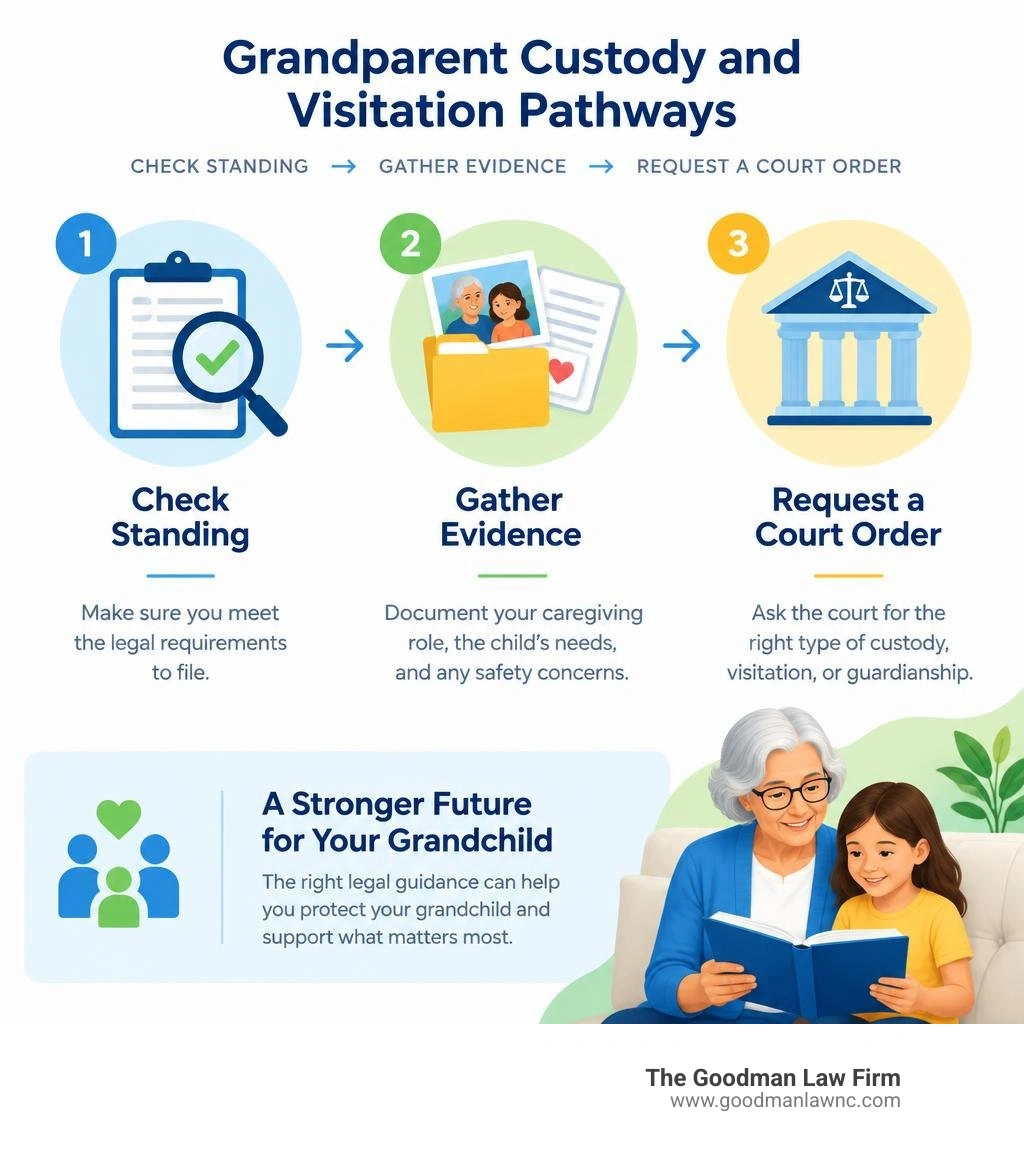
Understanding Grandparents' Rights: Legal Custody, Physical Custody, and Visitation
Navigating the legal system as a grandparent can feel overwhelming. Many grandparents step in when their grandchildren need stability, yet biological parents hold constitutional rights regarding the care and upbringing of their children. To secure court-ordered rights, you must understand the legal relief available and determine whether you meet statutory standing criteria.
| Type of Relief | What It Means | Grandparent Eligibility Standard |
|---|---|---|
| Legal Custody | Decision-making authority regarding education, medical care, and religion. | Must prove parental unfitness, neglect, abandonment, or inconsistent constitutional conduct. |
| Physical Custody | The child resides in your home, and you manage daily caregiving routines. | Requires overcoming parental presumption and proving residence with you serves the child's best interests. |
| Court-Ordered Visitation | Scheduled parenting time and access to spend time with the grandchild. | Permitted when an existing custody lawsuit is ongoing, or under specific statutory exceptions. |
Distinct Forms of Custody and Access
When seeking court intervention, it is essential to understand the differences between legal and physical custody.
- Legal Custody: Confers major decision-making power over the child’s welfare, schooling, healthcare, and religious upbringing.
- Physical Custody: Governs where the child lives day to day. A court may award primary physical custody to a grandparent if the parents cannot provide a safe environment.
- Visitation: Grants scheduled access to maintain a meaningful relationship without transferring residential or legal authority.
Understanding grandparent visitation eligibility is critical because visitation rules differ significantly from petitions for full legal or physical custody.
Establishing Legal Standing to File a Petition
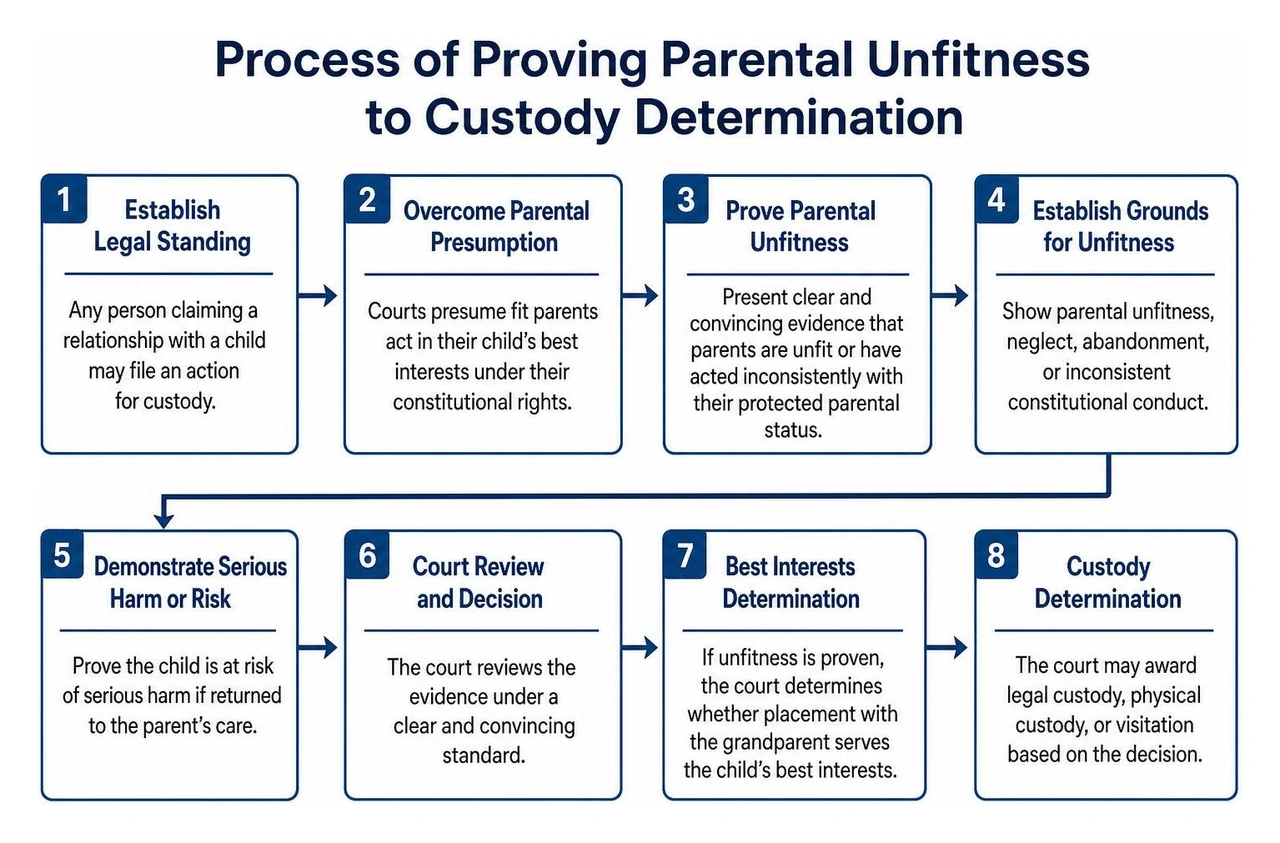
Before a judge can rule on your case, you must establish statutory "standing"—the legal right to initiate or join a lawsuit. Under North Carolina law, any person claiming a relationship with a child may file an action for custody, but strict constitutional standards apply.
Under the landmark U.S. Supreme Court case Troxel v. Granville, fit parents have a fundamental constitutional right to make decisions concerning the care, custody, and control of their children. Courts presume fit parents act in their child’s best interests. To understand who can file for custody or visitation, grandparents must show that this constitutional protection has been forfeited or that statutory criteria allow them to intervene.
Grounds for Securing Custody: Exceptional Circumstances and Parental Unfitness

To override the legal presumption favoring biological parents, grandparents seeking custody must demonstrate parental unfitness, neglect, or exceptional circumstances that threaten the child's welfare.
Proving Parental Unfitness and Serious Harm
A court will not remove a child from a parent simply because a grandparent has a nicer home or greater financial stability. Grandparents must present clear and convincing evidence demonstrating that the parents are unfit or have acted inconsistently with their protected parental status.
Grounds establishing parental unfitness often include:
- Chronic substance abuse or active addiction impairing parenting ability
- Severe physical, emotional, or sexual abuse
- Documented neglect, abandonment, or failure to provide basic shelter, medical care, and nutrition
- Long-term parental incarceration
- Severe, untreated mental health conditions that place the child in direct danger
How Courts Evaluate the Child's Best Interests
Once the hurdle of overcoming parental presumption is cleared, the court focuses entirely on the child's best interests. When evaluating the situation, judges weigh various factors:
- The emotional bond between the grandparent and grandchild
- The stability and safety of the grandparent’s home environment
- The child's adjustment to school, community, and routine
- Specific factors judges consider when determining custody in local district courts
- The broader standards for how a court determines child custody
- The mental and physical health of all parties involved
State-by-State Differences in Grandparent Custody and Visitation Laws
Grandparents' rights vary substantially across state lines. Understanding these differences helps provide context for how different jurisdictions handle these sensitive cases.
Texas and California Statutory Standards
In Texas, grandparents face a high evidentiary bar. Under the Texas Family Code, a grandparent can establish standing if the child has lived with them for at least six months (or moved out within 90 days of filing). To obtain court-ordered access, a Texas grandparent must overcome parental presumption by showing that denial of access would significantly impair the child's physical health or emotional development.
In California, courts balance parental rights with the child's best interests. California Family Code allows grandparents to request visitation if they have an established bond, but petitions are generally restricted if parents are married, unless exceptions apply—such as parental separation, unknown whereabouts, or stepparent adoption.
Mid-Atlantic and North Carolina Custody Rules
In Maryland, Virginia, Pennsylvania, and Washington D.C., grandparents can pursue custody or visitation by filing a formal petition, but they typically need to demonstrate exceptional circumstances or parental unfitness to overcome parental objections.
In North Carolina, the "intact family rule" strictly limits independent visitation petitions. If a biological family is intact and no custody action is pending, grandparents cannot sue solely for visitation. However, if a custody lawsuit is already active between the parents, grandparents may intervene under North Carolina law to request visitation rights. If parents are unfit, grandparents can initiate an independent custody action to secure physical and legal custody.
The Legal Process of Filing for Custody, Guardianship, or Adoption
Taking legal action requires a strategic approach, beginning with proper court filings. Understanding the process for filing for child custody ensures that you follow every statutory step correctly.
Navigating Petitions, Evidence Gathering, and Court Hearings
- Filing Pleadings: Drafting a verified complaint or motion to intervene setting forth standing and factual allegations.
- Serving Notice: Providing formal legal service to all parents and guardians.
- Evidence Collection: Gathering school records, medical reports, witness declarations, photographs, and communications.
- Avoiding Pitfalls: Reviewing and avoiding common custody mistakes like engaging in hostile text exchanges.
- Court Hearings: Presenting oral testimony and admitting documentary evidence before a family court judge.
Exploring Custody Mediation Before Trial
Litigation is not the only path. Resolving custody disputes through mediation allows grandparents and parents to reach voluntary, collaborative agreements outside a courtroom. Mediation lowers conflict, protects family relationships, and gives parties control over holiday schedules and visitation routines.
Why You Need a Grandparent Custody Attorney for Your Case

Grandparent custody disputes are legally and emotionally demanding. Reviewing guidance on determining if you need an attorney and choosing the right family law attorney helps ensure your family has skilled advocacy.
How a Grandparent Custody Attorney Overcomes the Parental Presumption
Overcoming constitutional parental protections requires strict adherence to evidence rules and statutory thresholds. An experienced attorney knows how to present clear evidence showing that a parent's conduct falls outside constitutional protections, shifting the focus to your grandchild's best interests.
Working with a Grandparent Custody Attorney to Prepare Your Evidence
When you begin your legal process, preparing for your initial family law consultation ensures you have the necessary records. Your legal advocate will assess your standing, issue subpoenas for critical medical or school documentation, and prepare compelling trial exhibits.
Frequently Asked Questions About Grandparent Custody and Visitation
Can grandparents seek child support after obtaining custody?
Yes. Once a court grants legal or physical custody to a grandparent, both biological parents retain a legal duty to financially support their child. The court can order child support according to state child support guidelines.
What is the difference between temporary guardianship and legal adoption?
Guardianship grants temporary legal authority to care for a child and make decisions without severing parental rights. Adoption permanently terminates biological parental rights, establishing the grandparent as the permanent, legal parent of the child.
How does domestic violence impact a grandparent's custody petition?
Domestic violence is a significant factor in custody determinations. When a child's safety is compromised by domestic abuse, courts act quickly. Grandparents can learn more about how courts handle custody involving domestic violence to pursue emergency protective custody orders.
Conclusion
Securing custody or visitation rights as a grandparent requires overcoming complex legal standards and constitutional hurdles. At The Goodman Law Firm in Charlotte, North Carolina, we bring over 15 years of dedicated family law experience to provide compassionate, strategic advocacy tailored to your family's needs. If you need help protecting your grandchild's future, schedule a child custody consultation with our team today.
We’re Here When You Need Us
Family law challenges can feel overwhelming, but you don’t have to face them alone. Let’s talk. Reach out today, and let’s take the next step together.